I really enjoy cross stitch & blackwork and am working on collecting an increasingly large stash of DMC threads (one day I will have them all!). I opt to store my threads in one of these Hemline storage boxes, on paper bobbins.
I was given a multipack of threads for my birthday last week, and also bought some more to work my way through every pattern in this book I borrowed via Kindle Unlimited (side note – you can borrow quite a few cross stitch books and magazines with a KU subscription & you can try it free for 30 days). Faced with dozens of new skeins to bobbinate – not to mention the bag of duplicates I have to work through sometime, I couldn’t face the annoyance of winding them all manually with the hand crank winder I have.
I knew that you could 3D print floss holders for use with electric drills – but I think that is absolutely overkill as drills are pretty heavy and probably a fair bit overpowered for the measly job of spinning a bit of cardboard! I have a handy little precision screwdriver, and we have a couple of standard size electric screwdrivers, so I went looking for a screwdriver bit bobbin winder instead. When I couldn’t find one, I designed my own.
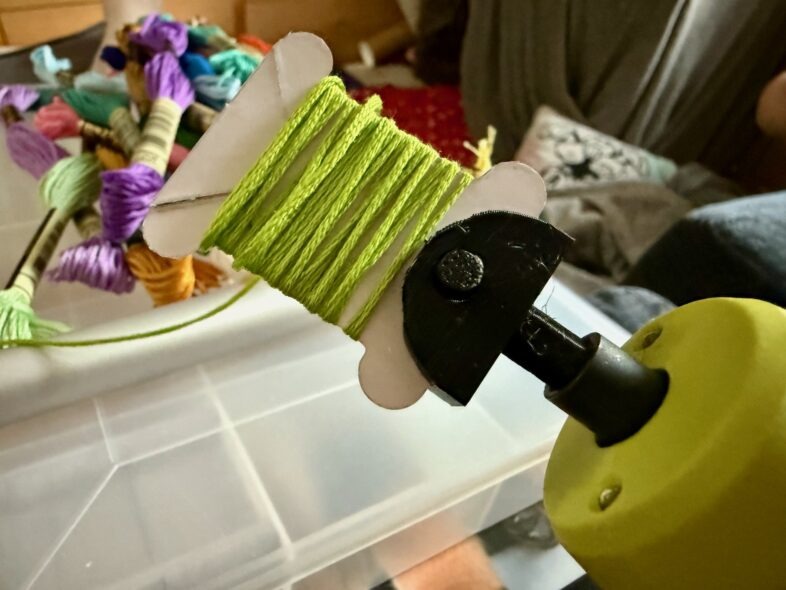
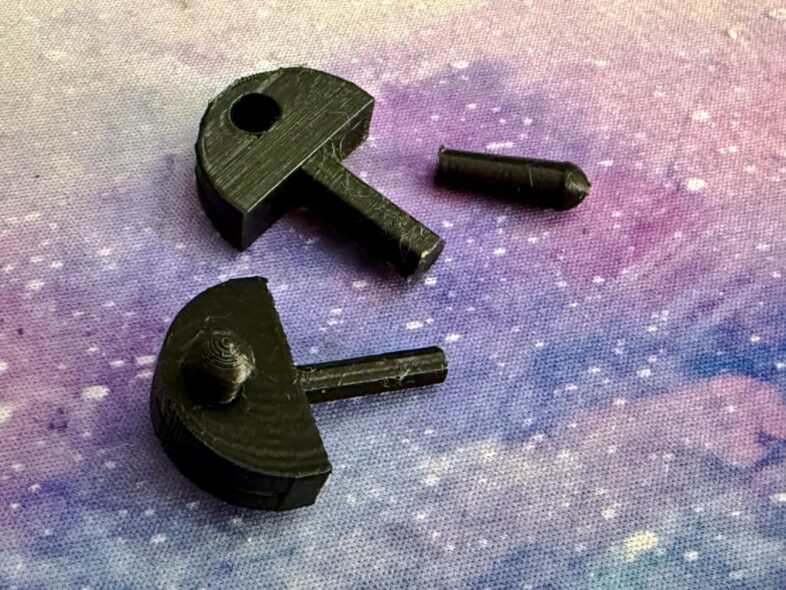
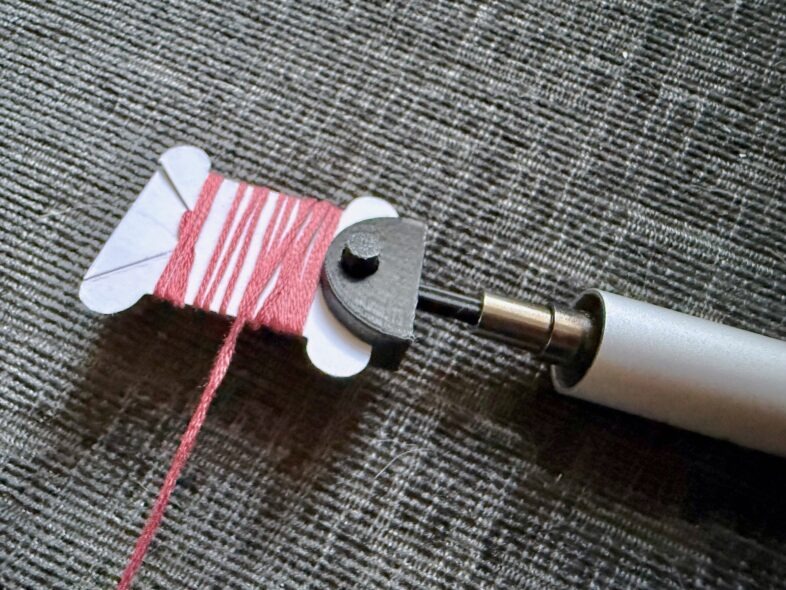
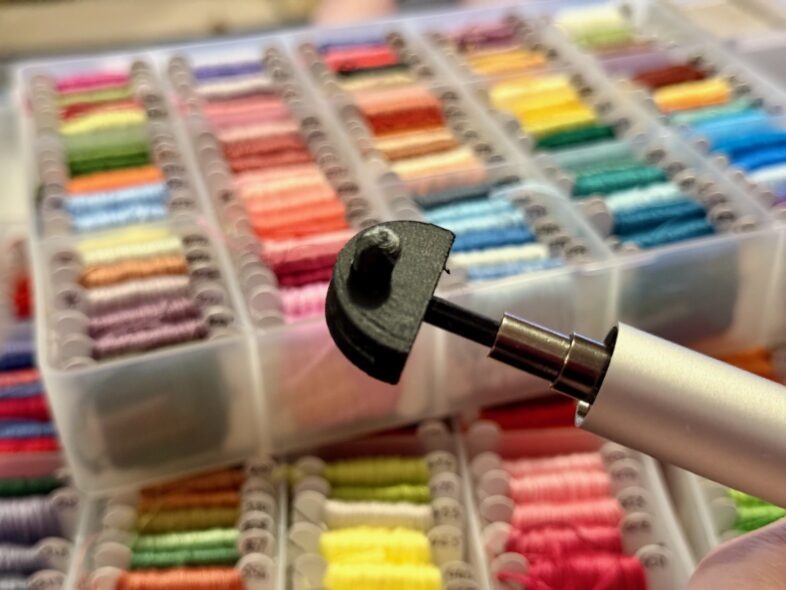
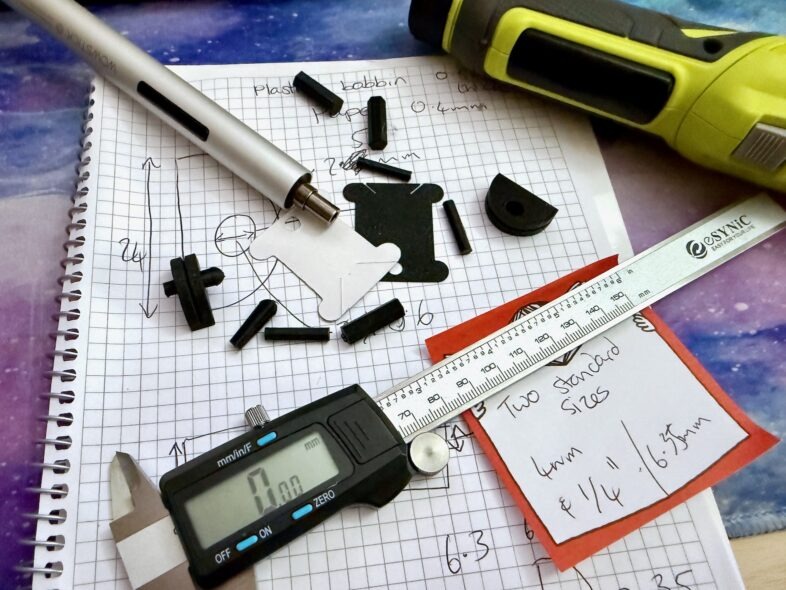
I created two variations of the Bobbin Winder Screwdriver Bit – one for standard electric screwdrivers (¼” or 6.35mm) and another for the smaller precision screwdriver bits (4mm). A simple peg holds the bobbin securely in place, and it’s designed for use with paper bobbins (I use these Hemline ones), and also this 3D printed one.
I wound all 40 skeins of floss easily in one sitting with my little screwdriver – and here’s a handy hint that I didn’t know until I saw it in a Facebook group… If you always pull DMC thread down from the bottom, it pulls out of the skein smoothly. You need to grab the loose thread that is below the lower label (the one with a barcode) and tug downwards. I pulled it out manually a little bit, secured it onto the bobbin with one of the slits, and then pinched the thread lightly with my left hand to give it a small amount of tension as it wound onto the bobbin.
If you don’t have an electric screwdriver already, you can pick one up on Amazon fairly inexpensively. The precision ones tend to be super lightweight and easy to use, so they are perfect for the job. James has a fancy one but I used a fairly cheap one (similar to this) I have stashed in my drawer for the job.
You can view and download the 3D files for free on Printables & MakerWorld.

I have shared these files under a Creative Commons (4.0 International License) Attribution—Noncommercial—Share Alike license, so they are for personal use only, please.