Disclosure: This product was sent to us free of charge for the purpose of this review. However, as per my PR Info page, this review represents our honest opinion of the product. This post may contain affiliate links.
Product: Science Scramble (Physics)
Price: £29.98
Age Range: Key Stage 3 (11+)
Manufacturer’s Description: The game involves frantic fun as you make your way around the board to collect types of energy, forces and electrical symbols needed to get back to Earth, winning merit points as you go. Along the way you will need to answer physics questions but beware of dangers in the universe that will stop you in your tracks!
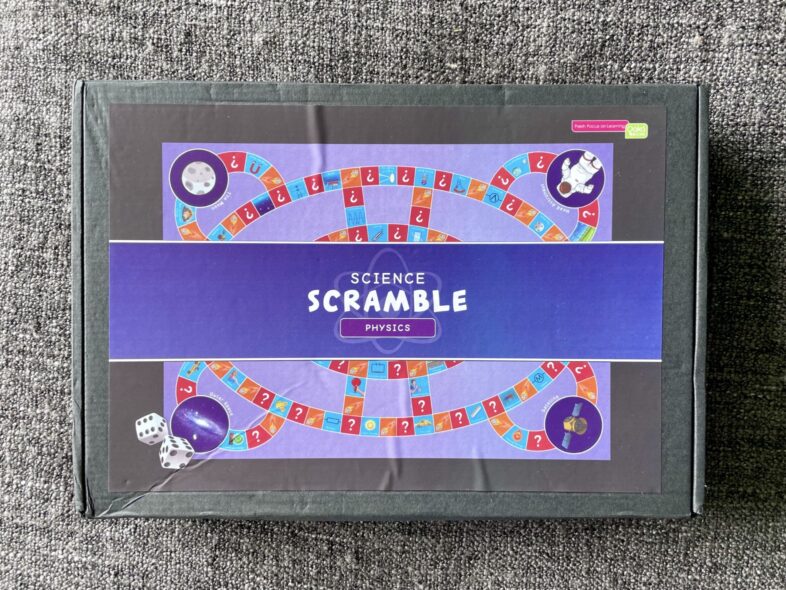
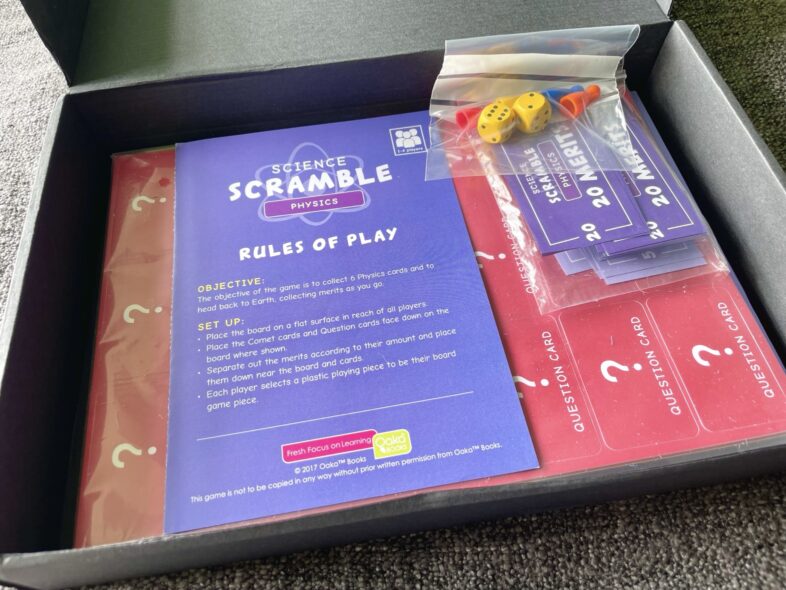
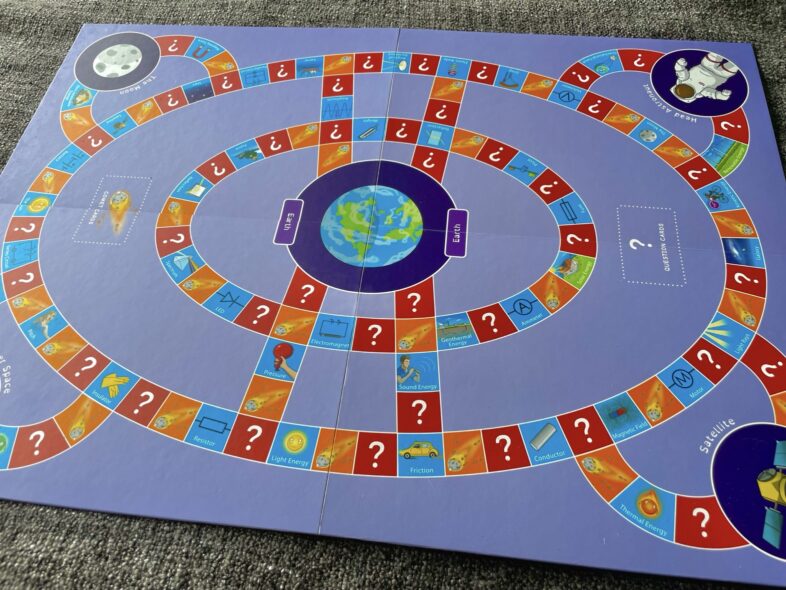
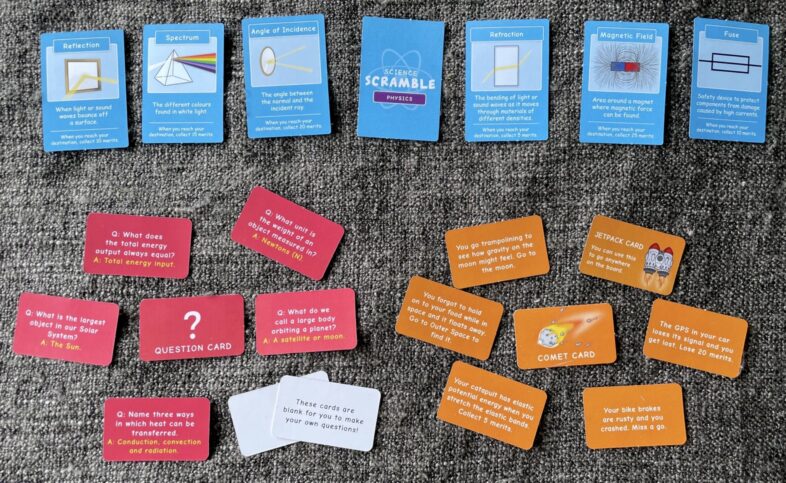
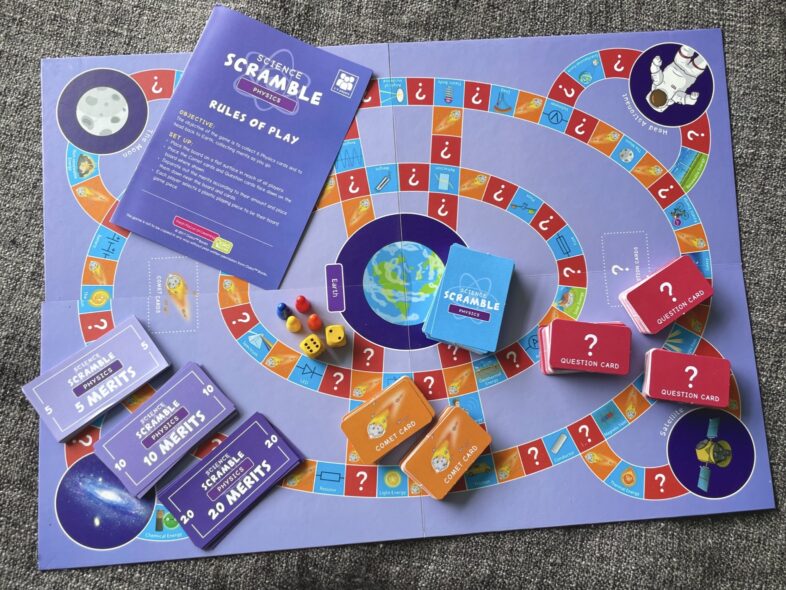
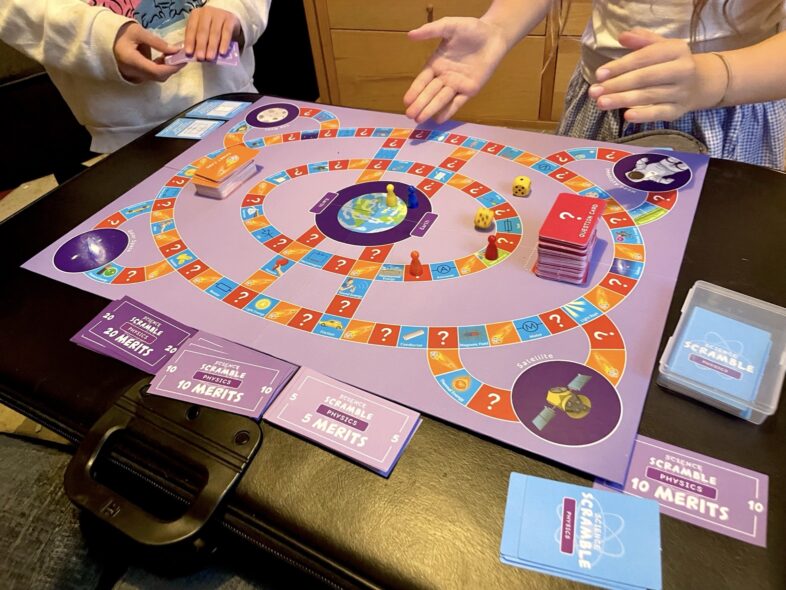
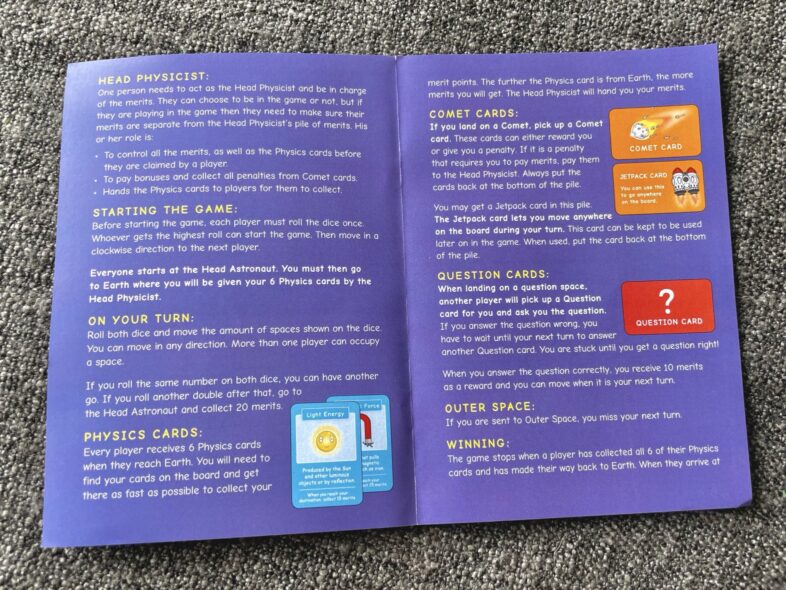
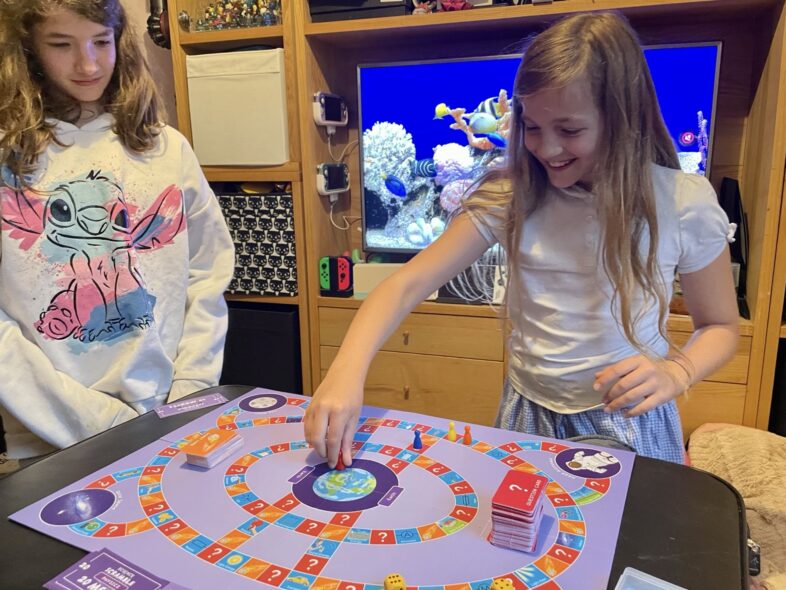
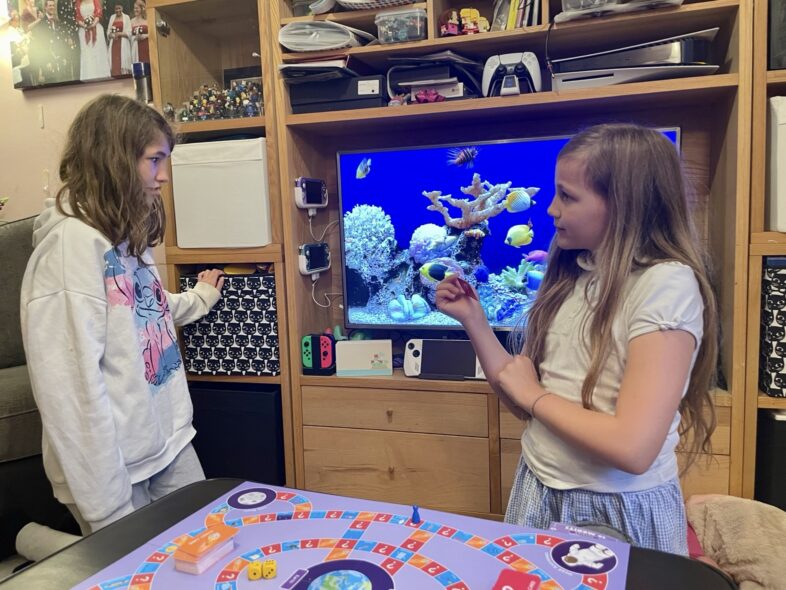
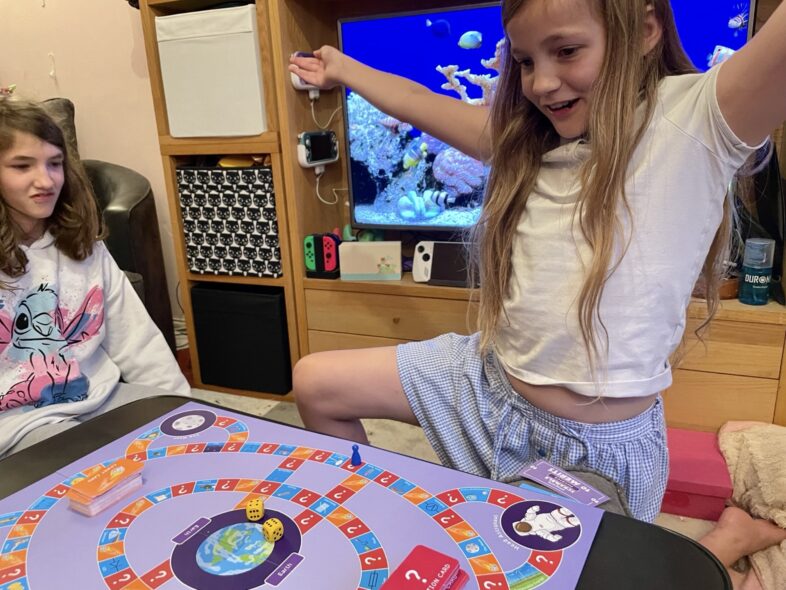
Rating: (5/5 stars) Review: When Oaka books approached me about the possibility of reviewing their products, I thought that their Science Scramble games looked great as a way of making revising fun and less intimidating. Their brand motto is ‘Designed for dyslexics, effective for everyone.’ and after playing this game, I can see that they really put that slogan into action with this product. We were sent the Physics Science Scramble game for KS3, though they also make one for Biology and another for Chemistry, as well as having a range of games to cover several topics and educational stages. In addition to games, they also produce topic packs that include a booklet breaking the subject down to easy to revise chunks in addition to an active learning game or map. Included in the Science Scramble box is a game board, sheets of comet, question and physics cards, merit slips, a rules of play leaflet, plastic playing pieces, and a pair of dice. You get some blank question cards so that you can add your own questions, which is perfect if you have a few facts that need a bit of extra revision. I added a few resealable bags and a playing card storage box to our box to hold the various cards once they were popped out of their sheets – I think the lack of a few extra little storage bags was the only thing I had a problem with when it came to the packaging. The game board has the Earth in the middle, and four locations in the corners; The Moon, Head Astronaut, Satellite, and Outer Space. Paths link these five locations up and you can move in whichever direction you need to. The paths on the board consist of three types of spaces; question spaces, comets, or physics spaces. Each player begins the game on the Head Astronaut space, and then travels to Earth to collect six physics cards, answering questions or receiving comet cards along the way. Once you have received your six physics cards, you have to travel the board visiting the physics spaces that correspond to your cards. Once you have visited each of the six spaces you head back towards Earth. The first player to do this gets an additional 30 merits and ends the game – but doesn’t necessarily win it. The aim of the game is to collect as many merits as you can before it ends. You can earn 10 merits for answering a question correctly, between 5 & 25 merits for landing on one of your physics spaces (you can only do this once and the score is relative to how far from Earth you’ve had to travel), and occasionally a comet card will give you merits – or take them away. Rolling two doubles in a row will get you 10 merits, but also send you back to the Head Astronaut – so it can be good or bad depending on where you need to be. Your first double roll gets you another go. One player acts as the ‘Head Physicist’ and handles the merit & physics cards for the rest of the players. Once you get started playing, the rules are easy to follow. We made a few adjustments, because Lydia is only just finishing KS2, so some prompting through explanation or hints were allowed for her questions and instead of making everyone stay on a question space for repeated turns until they got one right we set a three turn limit. We spent over an hour and a half happily playing the game yesterday evening and it definitely made revising concepts more fun for Georgie, and Lydia enjoyed it as a way of learning more about physics. Questions often prompted further discussion between all of us to explain concepts in more detail. I do have A level physics (not to mention a Renewable Energy BSc degree) but it has been a long time since my education days so I did get a few questions wrong myself! The game definitely makes learning and revising science more fun, and both the question cards and physics cards help you improve your knowledge of key facts and concepts. I can see this as being a great alternative to the usual boring revision books, especially for teens with dyslexia or disorders like ADHD where concentrating on plain facts and blocks of text can become an issue. The price is a touch high for a board game, but it isn’t churned out from one of the huge board game companies, but comes from a smaller specialist educational company – so the price is understandable and definitely reasonable. It has a huge amount of question cards to go through so you won’t get bored answering the same few questions over & over. The question cards could also double as flashcards for quick revision sessions. Although this game is aimed at Key Stage 3 pupils, I think that it would also be useful for GCSE students to help them reinforce the basic concepts, facts and equations that underpin the higher level of study in KS4. Lydia says: I think that it is a very fun game and the way it works is very smart. It is a very good way of learning scientific facts and helping your education. Overall, it is also extremely entertaining and a good game to play with your friends and family. Georgie says: I think it was an enjoyable and educational game, especially as I am in KS3 and starting triple science next year. I would definitely play it again. We give Science Scramble Physics 5 stars.